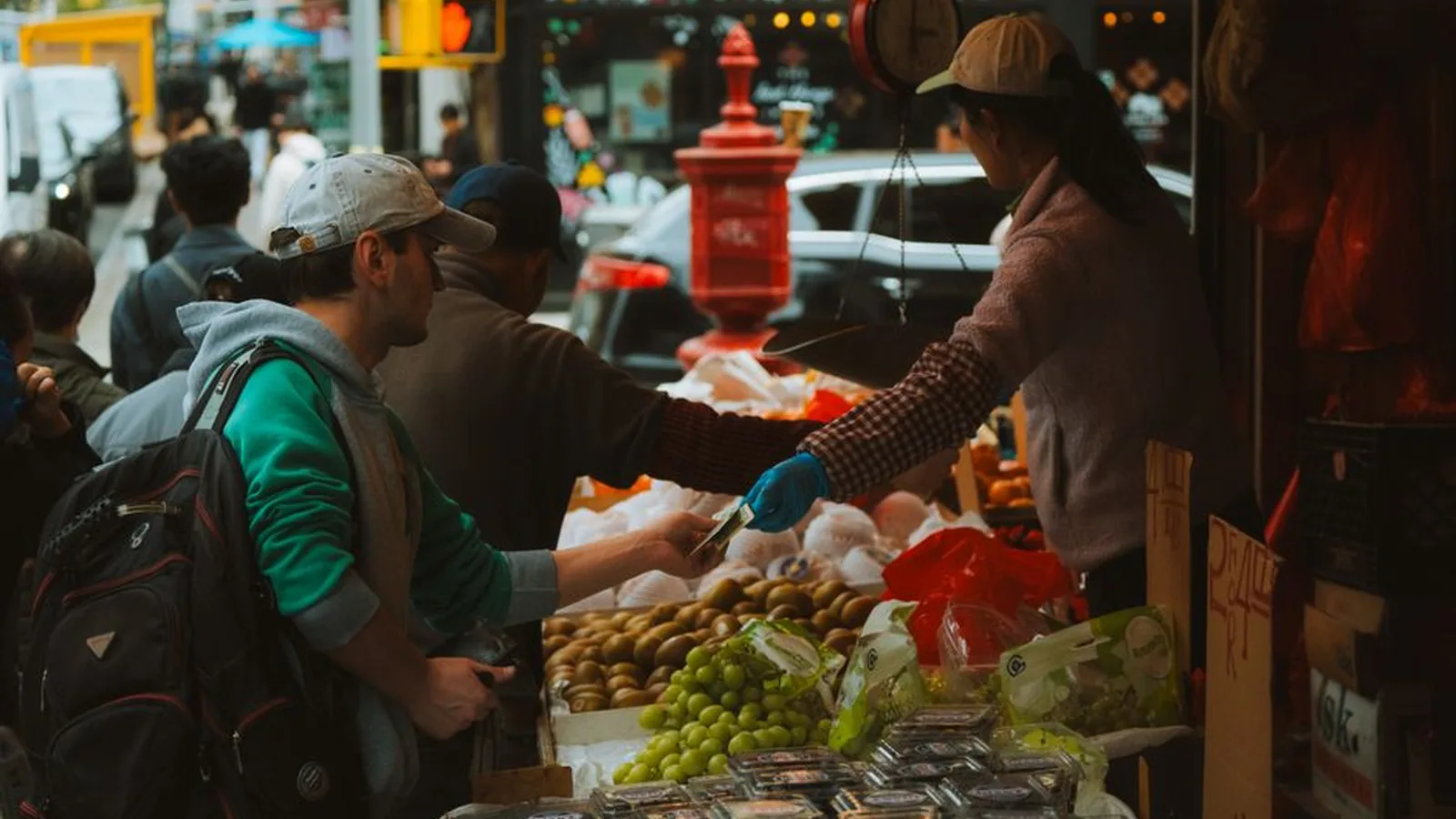
If you want a classic New York market experience that is genuinely useful, not just scenic, the Union Square Greenmarket is one of the best places to go. Operated by GrowNYC, it is the organization’s flagship farmers market and has grown from a handful of farmers in 1976 into a major regional market with, in peak season, as many as 140 farmers, fishers, and bakers. It runs year-round in and around the north and west sides of Union Square Park in Manhattan.
For visitors, that means more than pretty produce. The market is a place to buy fruit, vegetables, flowers, breads, dairy, meat, seafood, honey, maple products, cider, and other farm goods directly from regional producers. For New Yorkers, it is a routine shopping stop. For travelers, it is one of the easiest ways to see everyday city life while also eating well.
What the Union Square Greenmarket is
The Union Square Greenmarket is an open-air farmers market run by GrowNYC. Its official location is along 17th Street between Broadway and Park Avenue South, and along Union Square West between 17th Street and 15th Street. GrowNYC lists the market as active year-round on Mondays, Wednesdays, Fridays, and Saturdays from 8:00 a.m. to 6:00 p.m. The compost collection associated with the market ends earlier, at 5:00 p.m. on those same days. The market occupies the north and west plazas of the park area, and Union Square’s local district organization describes it as an iconic open-air market with more than 140 vendors in season.
Because it is a producer-focused market rather than a generic street fair, what you buy is tied to farms and food makers from the region. GrowNYC’s current producer lists show vendors from New York, New Jersey, Pennsylvania, Connecticut, and nearby areas, with offerings that can include vegetables, orchard fruit, flowers, breads, cheeses, eggs, fish, meats, mushrooms, honey, maple syrup, and baked goods.
Why it is so well known
Union Square Greenmarket stands out because of its scale, its location, and its reputation with both locals and chefs. GrowNYC calls it the organization’s flagship market and says the seasonal selection is unusually broad. The market also sits in one of Manhattan’s busiest public spaces, making it easy to combine with shopping, transit, museums, downtown sightseeing, or a casual walk through the neighborhood.
It is also one of the most visible examples of regional food in New York City. Even if you do not plan to cook, the market works well as a browsing stop: you can admire peak-season tomatoes, peaches, apples, bouquets, mushrooms, and breads, then take away picnic supplies or snacks.
What you can expect to find
Selection changes by day and season, which is part of the appeal. GrowNYC publishes day-specific producer lists and market maps for Union Square, so the lineup on a Monday is not necessarily the same as on a Saturday. On a recent official Monday list, vendors included sellers of artisanal breads and pastries, heirloom tomatoes and peppers, organic vegetables, eggs, flowers, mushrooms, orchard fruit, honey, maple products, and meats.
In practical terms, most visitors should expect four broad categories:
Peak-season produce
Summer and early fall tend to be especially rewarding for variety. That is when the market is most visually impressive and when the greatest number of regional growers are typically present. Tomatoes, peppers, greens, herbs, berries, stone fruit, and later apples and squash are common seasonal draws, depending on harvest timing.
Bread, pastries, and pantry items
Even if you are staying in a hotel, baked goods are an easy buy. Official producer listings show breads, pastries, granola, maple products, and honey among the recurring offerings.
Flowers and plants
The market is also a strong flower stop, with fresh-cut arrangements and seasonal plants appearing on producer lists. If your goal is color, photos, and a classic market atmosphere, flowers often make the experience feel fullest.
Proteins and specialty foods
Depending on the day, GrowNYC lists seafood, eggs, cheeses, beef, pork, chicken, mushrooms, and other specialty items. That makes the market especially useful for New Yorkers shopping seriously, not just browsing.
When should you go?
The best time depends on what kind of visit you want.
Go early for the best selection
If your priority is produce choice, arrive close to opening, ideally between 8:00 and 10:00 a.m. GrowNYC’s official hours begin at 8:00 a.m., and earlier shopping generally gives you the strongest choice in fragile or popular items like berries, heirloom tomatoes, peaches, specialty mushrooms, and standout breads.
Early morning is also the most comfortable time if you want to move efficiently, talk to vendors, and avoid the densest crowds.
Go late morning for atmosphere
If you want the market at its liveliest, aim for late morning to around lunchtime, especially on Friday or Saturday. That is often the sweet spot for visitors who want the full Union Square experience: busy aisles, lots of visual abundance, flowers, people watching, and easy access to nearby cafes and shops afterward.
The tradeoff is crowding. Union Square’s market can be very busy, and GrowNYC notes that the site can draw up to 60,000 visitors on open days in peak periods.
Go on Saturday for the biggest visitor experience
Saturday is the best bet if you want the market to feel like an event. It is usually the easiest day for out-of-town visitors and for New Yorkers not shopping on a workday. Expect the strongest social atmosphere, but also the most congestion.
Go on Monday or Wednesday for a calmer visit
If you want a more local, less hectic experience, Monday and Wednesday mornings are often the better choice. You still get the market itself, but generally with fewer leisure crowds than a Saturday visit.
Go in summer and fall for maximum abundance
The market is open year-round, but late summer through fall is usually the most rewarding season for first-time visitors because of the sheer range of produce and flowers. Since this listing is for August 24, 2026, that places a visit in a particularly strong late-summer window, when tomatoes, peppers, fruit, herbs, flowers, and other warm-weather products are often at their peak.
Best days for different kinds of visitors
For first-time tourists
Choose Saturday morning if you want the fullest, most photogenic version of the market.
For food-focused travelers
Choose any market day early, especially if you plan to shop seriously or assemble a picnic.
For locals running errands
Choose Monday, Wednesday, or Friday morning, when it can be easier to shop with purpose.
For families or casual browsers
Choose late morning, when the park and surrounding area are fully active and it is easy to turn the trip into a broader Union Square outing.
How to get there
The market is in one of Manhattan’s easiest transit hubs. The nearest subway complex is 14 St–Union Sq. Official MTA accessibility documentation lists the 14 St–Union Sq station on the N/Q/R/W lines as fully accessible, and the 14 St–Union Sq station on the L line as fully accessible. That can matter for visitors using elevators or planning step-free access. As always, elevator availability can change day to day, so checking current MTA service status before leaving is wise.
On foot, the market sits around Union Square Park’s north and west edges, so it is also easy to reach from Flatiron, Gramercy, Greenwich Village, the East Village, and lower Midtown.
Payment and benefits
GrowNYC says Union Square Greenmarket accepts cash, debit, and credit, along with several nutrition benefit programs including SNAP EBT, Farmers’ Market Nutrition Program benefits, FreshConnect Coupons, selected Healthfirst OTC benefits, Health Bucks, and Greenmarket Bucks. GrowNYC also states that shoppers who spend $2 in SNAP/EBT/Summer EBT receive a $2 Health Buck bonus, up to $10 per day.
That information is especially useful for regular NYC shoppers, but it also helps visitors know the market is set up for real transactions, not just browsing.
Tips for a better visit
Bring a tote bag
You will almost certainly buy more than expected, especially if fruit, flowers, or bread catch your eye.
Do one full lap first
Because vendor selection varies and some items repeat, a first pass helps you compare quality, quantity, and prices before buying.
Shop by season, not by list
The market is best when you let the season guide you. Buy what looks exceptional that day.
Don’t expect every vendor every day
GrowNYC’s day-by-day producer lists and maps make clear that lineups shift. If you are hoping for a specific farm or product, check the official Union Square Greenmarket page before you go.
Pair it with the neighborhood
Union Square Park and the surrounding district are full of places to sit, eat, and continue your day. The nearby park and plazas make it easy to turn market purchases into a snack break or informal picnic.
Important limitations to know
This is not a bargain-basement produce market, and it is not a flea market. Prices can reflect regional production, seasonal availability, and specialty sourcing. Also, while the market is open until 6:00 p.m., serious shoppers often do better earlier in the day because selection naturally thins out.
Another point of confusion for first-time visitors: Union Square can host other plaza activity and non-Greenmarket vendors nearby, but the official GrowNYC market itself has its own listed producers, maps, and rules. If authenticity matters to you, use the official GrowNYC materials as your reference.
Bottom line
The Union Square Greenmarket is New York City’s best-known farmers market: a year-round, producer-focused open-air market in Union Square Park where regional farmers, bakers, fishers, and food makers sell directly to the public. Go early if you want the best food selection, go late morning if you want the liveliest atmosphere, and go in late summer or fall if you want the market at its most abundant. For an August 24, 2026 visit, it is a strong seasonal pick.