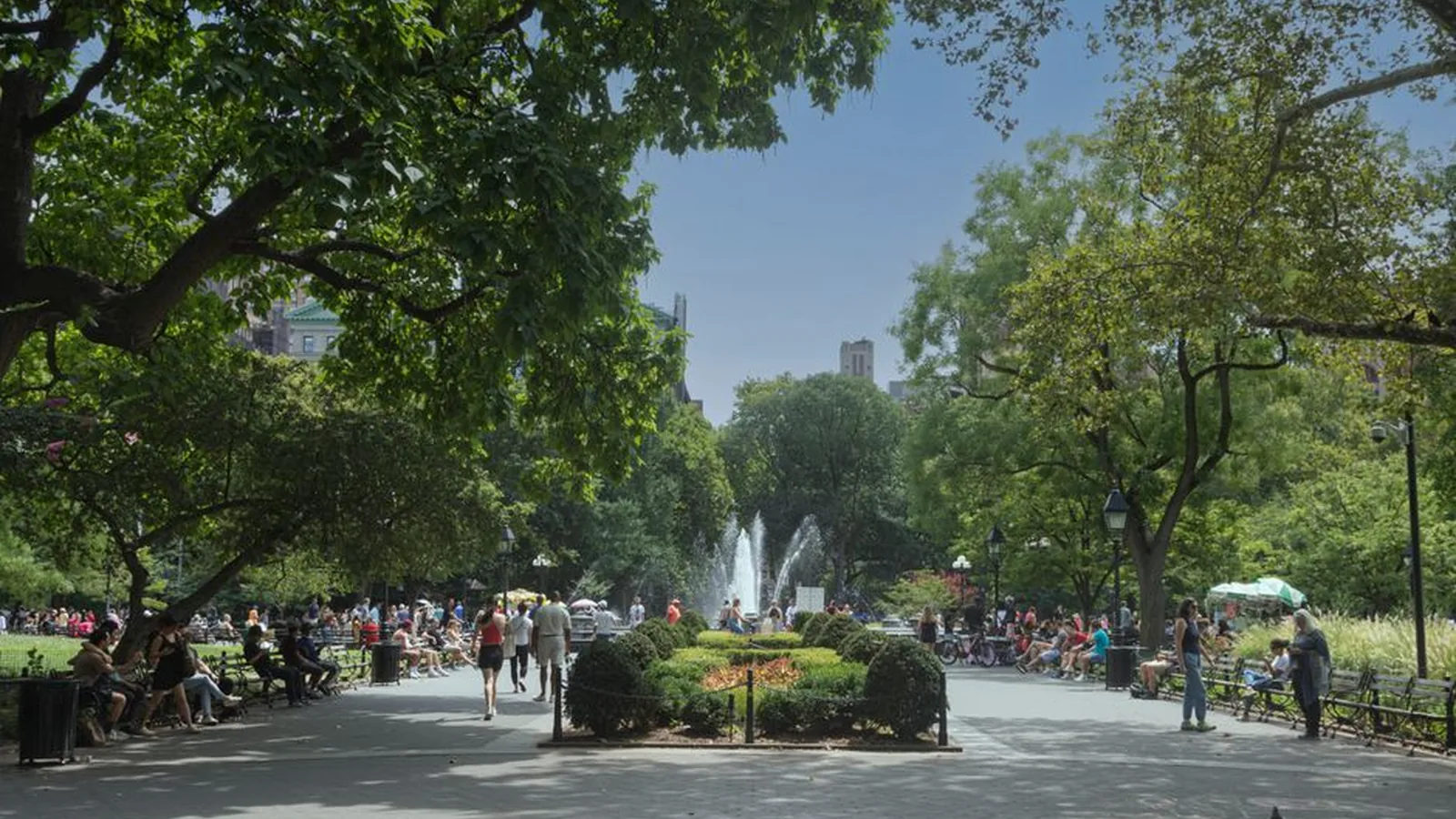
If you are sightseeing on foot in Manhattan, the best park is not always the biggest or prettiest. It is the one that lets you pause without stress: visible entrances, plenty of people around, reliable seating, nearby transit, and a restroom you can actually find.
For most first-time visitors, the safest and most practical rest stops are Bryant Park, the south and mid sections of Central Park, Madison Square Park, and the managed Hudson River parks pair of the High Line and Little Island. These places are popular, well-maintained, and easy to build into a walking day that includes Midtown, Fifth Avenue shopping, Flatiron, Chelsea, or the Meatpacking District. Official park operators also provide current visitor guidance, hours, and restroom details, which matters because NYC park access and facilities do change with weather, events, and maintenance.
Quick comparison: best tourist-friendly parks for a rest stop
| Park | Best for | Location | Safety feel for visitors | Restrooms | Free seating |
|---|---|---|---|---|---|
| Bryant Park | Midtown break between attractions | Between 40th–42nd Streets and Fifth–Sixth Avenues, behind the New York Public Library | Strong daytime choice: managed park, staffed facilities, heavy foot traffic, long operating hours | Yes; official public restrooms in the park, including accessible facilities at 40th Street and a staffed landmark restroom near 42nd Street | Yes; movable chairs and tables are a major advantage |
| Central Park (south/mid section) | Scenic longer break, families, people wanting lawns and classic NYC views | Focus on Central Park South, Sheep Meadow, Bethesda Terrace | Best in daytime and early evening in busy sections; less practical late at night because distances are larger and some areas feel isolated | Yes in the park overall; Bethesda Terrace has seasonal daily restroom hours, while Sheep Meadow itself has no restroom | Yes, especially benches and open lawn areas |
| Madison Square Park | Quick visible stop on a Midtown-to-Downtown walk | Bordered by Fifth & Madison Avenues and 23rd–26th Streets | Strong daytime visibility, surrounded by traffic and offices, easy to exit in multiple directions | No restroom inside the park; nearby DOT restroom on Madison Avenue between 23rd and 24th Streets | Yes; plentiful benches and perimeter seating |
| High Line | Walk-plus-rest experience in Chelsea/Meatpacking | Elevated linear park with entrances from Gansevoort Street up to 30th Street and beyond | Very controlled feel thanks to limited access points, clear rules, and consistent foot traffic | Yes at Gansevoort Street, 16th Street, and 30th Street | Yes, though seating can fill up at peak times |
| Little Island | Quiet Hudson River break with restrooms and views | Pier 55, between 13th and 14th Streets in Hudson River Park | One of the easiest parks for tourists to read quickly: defined bridges, managed operations, and predictable hours | Yes; restrooms near The Glade by the South Bridge entrance, including ADA-accessible all-gender restroom | Yes; varied seating throughout |
Sources for this table include Bryant Park hours and directions, Bryant Park restrooms, Central Park Conservancy restroom guide, Bethesda Terrace, Sheep Meadow, Madison Square Park visitor info, NYC Parks: The High Line, and Little Island rules & FAQ.
1) Bryant Park: best all-around Midtown rest stop
Bryant Park is the easiest park in Manhattan to recommend to tourists who want a safe-feeling, clean, highly functional break. It sits directly behind the New York Public Library’s main building, between 40th and 42nd Streets and Fifth and Sixth Avenues. The closest subway connections listed by the park are B, D, F, M at 42 St–Bryant Park and the 7 at Fifth Avenue. The park also notes nearby access from Times Square-area lines within a short walk. Bryant Park official directions
Why it works so well:
- It is in one of the busiest visitor zones in Midtown.
- It has movable chairs and tables, which are much easier for tired travelers than hunting for an empty bench.
- Its public restrooms are among the best-known in the city, with staffing and regular cleaning. Bryant Park restrooms
- Bryant Park Corporation states the park is staffed and operates with long daily hours, and city records tied to park operations note 24-hour security within the park. Bryant Park hours, NYC document referencing park security
Safety overview
For a first-time visitor, Bryant Park usually feels safer than many other public spaces because it is managed rather than passive. There are staff, dense foot traffic, adjacent office towers, and clear sight lines over much of the lawn and seating areas. That does not make it risk-free, but it does make it one of the easiest places to rest without feeling stranded.
Best use: daytime, late afternoon, and early evening in normal busy conditions. As with any large city public space, stay more alert if the park is unusually empty, very late, or during weather disruptions.
Restrooms and accessibility
Bryant Park lists two public restroom facilities. Its famous 42nd Street restroom is behind the library; the 40th Street restroom includes an accessible restroom and changing table. Park and restroom hours vary by season, so same-day checking is smart. Bryant Park restrooms
Smart walking route
Fifth Avenue shopping -> Bryant Park -> NYPL -> Times Square
This is one of the strongest low-stress tourist routes in Midtown. Walk Fifth Avenue, stop in Bryant Park for water and a restroom, visit the New York Public Library exterior or lobby if open, then continue west toward Times Square for evening lights. If you are carrying bags, this is also a practical zone to look up nearby luggage storage services such as Bounce or Nannybag before continuing on foot.
2) Central Park south and mid section: best scenic reset, with daylight rules
For classic New York scenery, the lower and mid sections of Central Park are still unmatched. For tourists who are already around Columbus Circle, Fifth Avenue, the Plaza area, or Museum Mile, the most practical resting spots are:
- Central Park South entrances
- Sheep Meadow on the west side between 66th and 69th Streets
- Bethesda Terrace at mid-park and 72nd Street
Official park guidance confirms that Central Park opens daily from 6:00 am to 1:00 am, but opening hours alone should not be mistaken for a recommendation to visit every section late at night. Central Park help center
Safety overview
Central Park is safest for tourists when you treat it as a daylight or early-evening destination in busy areas, not as a late-night shortcut. The south end and destination-heavy mid-park locations generally have the highest concentration of visitors. Bethesda Terrace and Sheep Meadow are designated Quiet Zones, which tends to support a calmer atmosphere during normal daytime use. Central Park help center
The main caution is scale. Unlike Bryant Park or Little Island, Central Park has longer internal paths, variable lighting conditions, and stretches that can feel isolated once crowds thin out. That is why it is best for a planned visit, not an unstructured late-night wander.
Where to rest
Sheep Meadow
Sheep Meadow is one of the best open-lawn places to decompress, especially for families who want skyline views and space. It is located on the west side between 66th and 69th Streets. The tradeoff: the Conservancy states there are no restrooms at Sheep Meadow itself, and the lawn opens daily at 11:00 am, weather and conditions permitting. It also closes seasonally in winter and may close in bad weather. Sheep Meadow, Central Park alerts
Bethesda Terrace
Bethesda Terrace is more structured and often better for a shorter stop because it has fixed architecture, benches nearby, and a restroom. The Conservancy lists the location as mid-park at 72nd Street and notes the restroom is open 6:30 am–9:00 pm daily, late March through early November; it is not wheelchair accessible. Bethesda Terrace
Central Park also maintains an official parkwide restroom guide, useful if you are entering from another side of the park. Central Park restroom map
Smart walking routes
Columbus Circle -> Central Park South -> Sheep Meadow -> Upper Fifth Avenue museums
Start near the southwest corner of the park, enter while the south end is active, rest at Sheep Meadow, then continue east or northeast depending on your museum plans.
Fifth Avenue / Plaza area -> The Pond area -> Bethesda Terrace -> Upper East Side or Museum Mile
This route works best in good weather and daylight. It gives first-time visitors a classic Central Park experience without wandering too far north.
3) Madison Square Park: best visible stop between Midtown and Downtown
Madison Square Park is an excellent tactical rest stop when you are walking south from Midtown or north from Greenwich Village, Chelsea, or Union Square. The Conservancy describes it as bordered by Fifth Avenue and Madison Avenue, and 23rd Street and 26th Street in the Flatiron/NoMad area. Madison Square Park visitor info
Nearest subway guidance from the Conservancy highlights 23rd Street Station service. Depending on where you approach from, nearby stations can connect you to the R/W and 6 lines. Madison Square Park visitor info
Safety overview
This park scores highly for tourists because it is compact, highly visible, and easy to exit. It is ringed by major streets, offices, residences, and regular pedestrian movement. If you are tired or unsure of your bearings, that visibility matters.
Compared with Central Park, Madison Square Park is less immersive but more legible. You can sit, reset, and quickly orient yourself toward Flatiron, Eataly, Union Square, Koreatown, or Midtown.
Restrooms and seating
The main drawback is simple: there are no bathrooms in the park. The Conservancy directs visitors to a DOT-owned restroom on Madison Avenue between 23rd and 24th Streets. Madison Square Park FAQ
The upside is seating and convenience. There are benches, perimeter edges, and food options nearby, including the well-known Shake Shack location near the park’s southeast side. Madison Square Park map and guide pages, park guide reference near 23rd Street
Smart walking route
Empire State Building / Koreatown -> Madison Square Park -> Flatiron -> Union Square
This is one of the most natural Manhattan walking corridors. Madison Square Park is the ideal midpoint if you want a calmer break before continuing downtown. It is also a good place to reassess plans if heat, rain, or tired children are slowing your day. Nearby avenues make it easy to switch to a rideshare service or hail a taxi if needed.
4) High Line and Little Island: best managed west-side walking break
For tourists exploring Chelsea, Hudson River Park, or the Meatpacking District, the strongest rest combination is the High Line plus Little Island.
High Line
NYC Parks lists public access points at Gansevoort Street and Washington Street, 14th Street, 16th Street, 17th Street, 20th Street, 23rd Street, 26th Street, 28th Street, and more northward points. Elevators are available at several key entrances, including Gansevoort, 14th Street, and 23rd Street. Official restroom locations are Gansevoort Street, 16th Street, and 30th Street. NYC Parks: The High Line
Safety overview
The High Line tends to feel safe to tourists because it has:
- restricted entry and exit points,
- heavy and generally continuous foot traffic,
- clear park rules,
- and fewer hidden corners than a street-level park.
That said, it is not the best place for a long stationary break during peak visitor times because seating can fill up and pedestrian flow keeps moving. Think of it as a walking rest, not always a full picnic stop.
Little Island
Little Island is located at Pier 55 between 13th and 14th Streets in Hudson River Park. It opens at 6:00 am year-round, with seasonal closing hours. The park states that restrooms, including an ADA-accessible all-gender restroom, are located near The Glade just past the South Bridge entrance. Little Island FAQ
Why this pair works so well
Together, these two parks give you one of Manhattan’s easiest west-side sightseeing circuits: elevated views, restricted access points, strong visitor management, and a dependable restroom option at Little Island. For travelers doing a NYC walking tour of Chelsea galleries, the Whitney area, or the Meatpacking District, this is often the best way to schedule a break without losing momentum.
Smart walking route
Chelsea Market -> High Line -> Little Island -> Hudson River walk -> Meatpacking dinner
If you need to sit longer, save that stop for Little Island rather than the busiest sections of the High Line. If you are checking out of a nearby boutique hotel before an evening plan, this is another area where arranging luggage storage in advance can make the route much easier.
Practical NYC park safety tips for tourists
These parks are good choices, but your habits matter just as much as the location.
Use these rules for a safer rest break
- Prefer daylight and high-traffic periods. Even well-known parks feel different when crowds disappear.
- Sit where you can see exits or main paths. This is especially useful in larger parks like Central Park.
- Keep bags zipped and phones in hand, not on the table. Opportunistic theft is more common than dramatic street crime.
- Do not spread out all your shopping bags. You want to look settled, not distracted.
- Check official park alerts in bad weather. Lawns and facilities can close temporarily. Central Park alerts, Madison Square Park visitor page
- Know your bathroom plan before you sit down. Bryant Park and Little Island are strongest here; Madison Square Park is weaker.
- If a park suddenly feels empty or off, leave without overthinking it. In Manhattan, another café, hotel lobby, museum, or busy plaza is usually close.
A realistic note on “safe” in NYC
No park can be labeled completely safe at every hour. A better test for tourists is: Can I rest here without feeling isolated, confused, or stuck? By that standard, Bryant Park ranks first for all-around practicality, Madison Square Park excels as a visible break stop, the High Line/Little Island pair is strongest on the west side, and Central Park is best when used intentionally in active daytime sections.
For broader context, these areas are covered by regular NYPD precinct reporting, including Midtown South and the Central Park Precinct, but raw precinct crime totals do not by themselves tell a tourist whether a particular bench or lawn is a good place to pause. For day-trip planning, visibility, staffing, foot traffic, and restroom access are often more useful indicators. NYPD Midtown South, NYPD precinct crime statistics hub
Which park should you choose?
Choose Bryant Park if you want the easiest answer.
Choose Central Park if scenery matters more than convenience and you are visiting in the daytime.
Choose Madison Square Park if you are walking between Midtown and Downtown and need a short, visible reset.
Choose the High Line plus Little Island if you are sightseeing on the west side and want a managed route with easy orientation.
Bottom line
For most tourists in Manhattan, the best safe parks to rest are Bryant Park, Central Park’s busy south/mid destinations, Madison Square Park, and Little Island with the High Line. Bryant Park is the strongest all-around choice for restrooms, seating, and stress-free Midtown access. Central Park is the best scenic option if you stick to popular daytime areas. Madison Square Park is a smart midpoint stop on longer walks. The High Line and Little Island are ideal for Chelsea and Meatpacking itineraries because they feel structured and easy to navigate.
If you build your day around these stops, you can walk more comfortably, reduce decision fatigue, and make smarter calls about transit, rideshare use, luggage storage, and meal breaks.
Sources
- Bryant Park: Hours and Directions
- Bryant Park: Public Restrooms
- Bryant Park: Accessibility
- Bryant Park operating document referencing security
- Central Park Conservancy Help Center
- Central Park Conservancy Restroom Guide
- Central Park Conservancy: Sheep Meadow
- Central Park Conservancy: Bethesda Terrace
- Central Park Conservancy Alerts
- Madison Square Park Conservancy: Visit
- Madison Square Park Conservancy park guide reference near 23rd Street
- NYC Parks: The High Line
- Little Island: Rules & FAQ
- NYPD Midtown South Precinct
- NYPD Borough and Precinct Crime Statistics