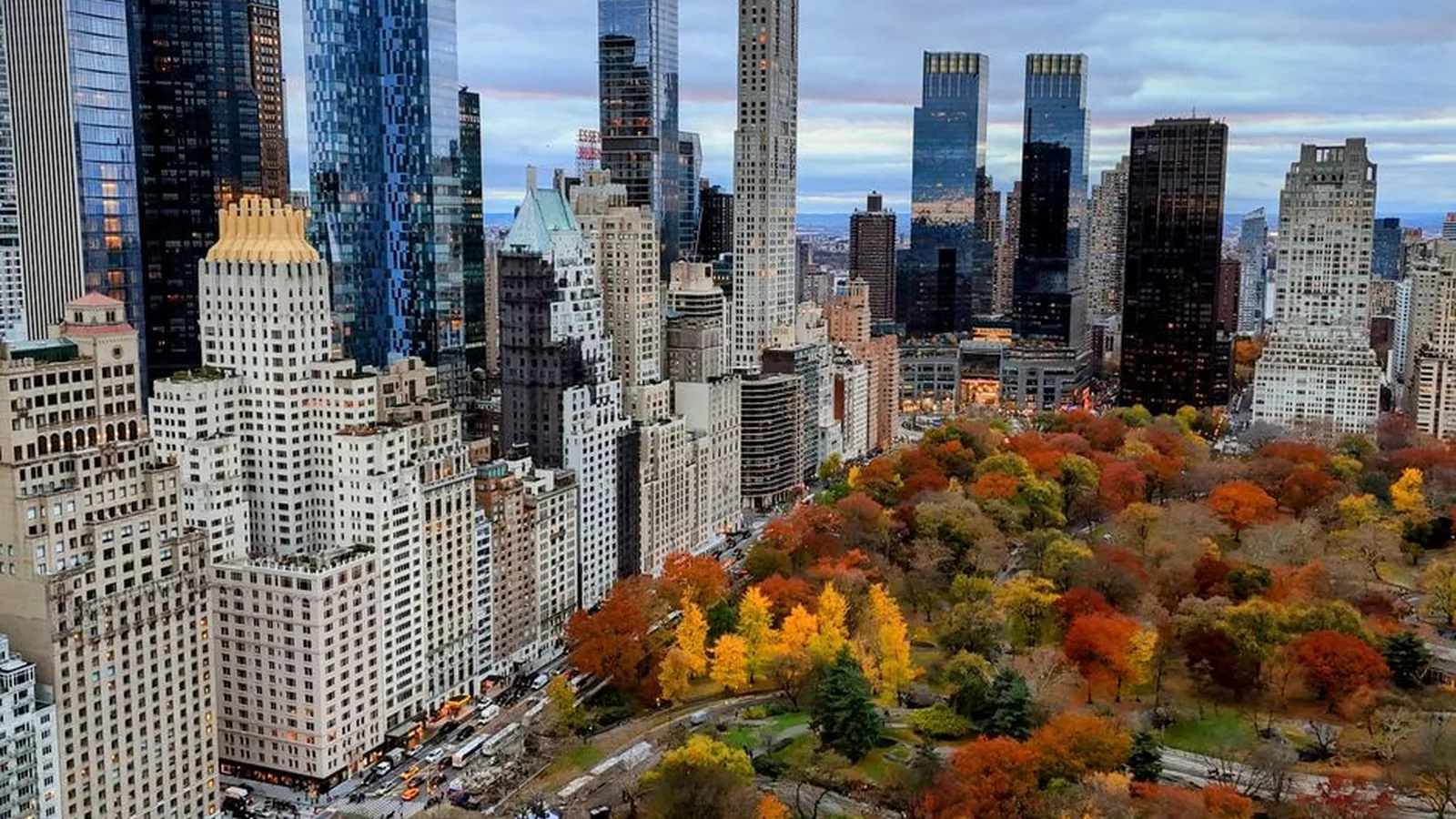
Fall in New York is not one fixed moment. In the city, color usually arrives later than many visitors expect, while upstate and mountain regions often turn earlier. If you want the best odds of catching vibrant leaves in 2026, use New York State’s weekly I LOVE NY Fall Foliage Report as your statewide timing guide and then fine-tune your plans park by park. The report for September 16–22, 2026 says the season is underway statewide, with the most advanced changes expected first in the Adirondacks. That matters for New York City travelers because it signals the start of the progression rather than peak color in Manhattan.
When fall foliage peaks in New York
The short version:
- Adirondacks and higher elevations: often first, starting in September.
- Hudson Valley, Catskills, and Shawangunks: usually build through late September into October.
- New York City, including Central Park: often peaks later, commonly from late October into early November rather than early October.
The Central Park Conservancy notes that the park’s foliage can turn later than other parts of New York because light, temperature, moisture, and the park’s built environment all affect timing. In other words, don’t assume that a great foliage weekend in the Adirondacks means Central Park has peaked too.
For the most reliable planning approach, check two sources together:
- The statewide I LOVE NY foliage report for broad regional timing.
- The Conservancy’s fall foliage map and seasonal updates for on-the-ground conditions inside Central Park.
Best fall foliage spots in Central Park
The Central Park Conservancy’s fall foliage map is the best official starting point. It highlights multiple zones where color is consistently strong across the park’s roughly 18,000 trees.
The Ramble and Tupelo Meadow
If you want one classic autumn scene, start here. The Conservancy specifically calls the Ramble’s Tupelo Meadow one of Central Park’s most iconic fall foliage locations, thanks in part to black tupelo trees that can shift dramatically through yellow to vivid red. The Ramble also layers woodland paths, pond edges, and bridge views into one compact area, which makes it especially good for photographers.
Why go: rich color variety, winding paths, and more natural-looking woodland scenes than many other parts of Manhattan.
Best photo idea: frame foliage through the water and stonework near the Lake, or shoot from nearby bridges for a more elevated composition.
The Pool
On the west side near West 100th Street, the Pool is one of the Conservancy’s top foliage picks. Official park guidance points to red maples, sweetgums, and willows around the shoreline, plus a rustic bridge that works well as a backdrop.
Why go: reflective water, quieter atmosphere, and a strong mix of shoreline trees.
Best photo idea: arrive early for softer light and calmer reflections.
North Woods
The fall foliage map highlights the North Woods, spanning roughly 101st to 110th Streets, as a major color zone with species including red maple, pin oak, red oak, black cherry, and sweetgum. This is one of the best places in the park to feel briefly removed from the city.
Why go: broader woodland immersion, less formal scenery, and excellent variety of reds, bronzes, and yellows.
Best photo idea: use the Ravine’s stream, footpaths, and stone details to add depth to leaf shots.
The Mall
The Mall is famous for its quadruple row of American elms, which the Conservancy says form a cathedral-like canopy over the promenade. In autumn, those elms turn the space into one of the park’s most recognizable golden corridors.
Why go: easy access, iconic symmetry, and one of the simplest places to get a classic Central Park fall image.
Best photo idea: stand centered on the promenade for a strong vanishing-point composition.
Conservatory Garden
The fall foliage map also singles out Conservatory Garden on the east side around 104th to 106th Streets. Official species notes include crabapple, star magnolia, and stewartia, which can add reddish-orange and purple tones to the usual yellows.
Why go: formal garden structure, color contrast, and a polished look that differs from the wilder sections of the park.
Best photo idea: pair foliage with gates, paths, or garden geometry for cleaner compositions.
Bow Bridge and the Lake edges
While the bridge itself is better known as a landmark than as a foliage grove, the Conservancy recommends seeing the Ramble’s colors from Bow Bridge and nearby boat landings. This is one of the best places to capture both water and skyline-adjacent park scenery.
Why go: strong mix of architecture, reflections, and surrounding trees.
Best photo idea: shoot toward the bridge with surrounding leaves rather than treating the bridge as the only subject.
How to plan a Central Park foliage day
Go later than you think
A common mistake is showing up in early October expecting peak color in Manhattan. Central Park often turns later than upstate areas, according to the Central Park Conservancy. If your schedule is flexible, late October through early November is often a smarter target window for the city.
Use the official map before you enter
The Conservancy offers a downloadable fall foliage map and a general photography guide. These are genuinely useful, especially if you only have a couple of hours and want to connect several high-color zones efficiently.
Pick your light carefully
- Morning: better for quieter paths and smoother water reflections.
- Late afternoon: warmer tones and more dramatic glow through leaves.
- Overcast days: often best for even color and fewer blown-out highlights.
Build a simple route
A strong half-day foliage route is:
The Mall → Bow Bridge/Lake edge → the Ramble → Bethesda area if desired
If you want a less crowded plan, try:
The Pool → North Woods → Conservatory Garden
Best fall weekend getaways from New York City
If Central Park is your easy city option, these trips give you a better chance at bigger landscapes and earlier peak color.
Hudson Valley river views: Cold Spring, Beacon, and Poughkeepsie
The Metro-North Hudson Line is one of the most practical leaf-peeping escapes from New York City. North of Spuyten Duyvil, the line runs largely alongside the Hudson River, making the ride itself part of the experience. Popular stops for autumn weekends include Cold Spring, Beacon, and Poughkeepsie.
Why it works: no car required, scenic ride, and flexible station-to-town access.
Best for: travelers who want a day trip with good views but minimal logistics.
Walkway Over the Hudson
In Poughkeepsie and Highland, Walkway Over the Hudson State Historic Park offers one of the easiest elevated foliage views in the Hudson Valley. The park is open year-round, conditions permitting, and the walkway’s published 2026 hours vary seasonally; from September 14 to October 4 it is open 7:00 a.m. to 7:00 p.m., with earlier closing later in October. The companion Walkway site also states regular access is free during standard operating hours.
Why go: panoramic river valley views without a strenuous hike.
Storm King Art Center
Storm King Art Center combines large-scale outdoor sculpture with a 500-acre open-air setting in the lower Hudson Valley. Its official visitor information says it is open 10 a.m. to 6 p.m., Wednesday through Monday, and closed Tuesdays.
Why go: foliage plus art, broad meadows, and an outing that works for mixed-interest groups.
Best for: people who want a scenic autumn day without committing to a rugged hike.
Minnewaska State Park Preserve
For cliffs, carriage roads, lakes, and sweeping Shawangunk views, Minnewaska State Park Preserve is one of the strongest fall choices within reach of the city. Official park information lists a $10 per car vehicle fee and notes that hours change seasonally.
Why go: dramatic ridge-top scenery, accessible walking options, and some of the region’s most photogenic terrain.
Best for: hikers, photographers, and travelers willing to drive for a bigger landscape payoff.
Important limitation: parking can be a major constraint on popular weekends, so verify current conditions before leaving.
Bear Mountain State Park and Perkins Memorial views
Bear Mountain State Park is a classic lower-Hudson option, and the state park system notes that Perkins Memorial Drive and Tower are open from April through late November, weather permitting. That makes it one of the more approachable elevated-view destinations during foliage season.
Why go: easier mountain scenery from the city, especially for drivers.
Best for: a flexible road trip with less hiking than the Catskills or Adirondacks.
Catskills for a bigger wilderness feel
If you want a more rugged foliage weekend, the New York State Department of Environmental Conservation is the primary source for Catskills planning. DEC emphasizes that backcountry conditions can change suddenly and points visitors to Catskill backcountry information, trail updates, and Hike Smart NY.
Why go: larger forests, mountain overlooks, and better odds of earlier color than NYC.
Best for: experienced hikers or weekend travelers building a more outdoor-focused trip.
Important limitation: trail, weather, and parking conditions can change quickly, so check DEC updates before you go.
Scenic train option beyond day trips
If the ride itself is part of the goal, Amtrak’s Adirondack train is one of New York’s signature scenic routes. Amtrak describes it as operating between New York, NY and Rouses Point, NY, with Hudson Valley and upstate views along the way.
This is less flexible than a quick Metro-North trip, but it can work well if you want a longer foliage journey rather than a simple park outing.
Practical foliage tips for 2026
Follow weekly, not yearly, assumptions
The I LOVE NY foliage report is issued weekly and defines peak as the best overall appearance of the season, factoring in color progression and leaf drop. That is more useful than relying on a generic “peak week” you remember from a prior year.
Expect crowds on October weekends
Popular foliage destinations close to New York City can get busy, especially parking-dependent parks. When possible:
- arrive early,
- travel midweek,
- use transit where practical,
- and verify hours and alerts right before departure.
Prepare for trail conditions
For mountain or preserve outings, DEC advises hikers to plan ahead, check weather, stay on trails, and carry appropriate gear. Use Hike Smart NY and local park alerts rather than assuming dry, easy conditions.
Don’t chase only “peak”
Some of the best photographs happen just before or just after official peak. Early color can create contrast with lingering green, while slightly post-peak days often add leaf-covered paths and moodier woodland scenes.
Bottom line
For Central Park, your best bets are the Ramble and Tupelo Meadow, the Pool, North Woods, the Mall, Conservatory Garden, and Bow Bridge/Lake viewpoints, with the understanding that Manhattan often turns later than upstate New York. For weekend getaways, start with the Hudson Valley via Metro-North, then consider Walkway Over the Hudson, Storm King, Minnewaska, Bear Mountain, or the Catskills depending on how much scenery, hiking, and travel time you want.
The most dependable strategy for 2026 is simple: use the latest I LOVE NY foliage report for timing, confirm site-specific details with the official park or transit source, and stay flexible by a few days if you can.
Sources
- I LOVE NY Fall Foliage Report
- Central Park Conservancy: Downloadable Maps
- Central Park Conservancy Fall Foliage Map (PDF)
- Central Park Conservancy: What Are Central Park’s Most Colorful Fall Trees?
- Central Park Conservancy: Bridges, Arches, and Foliage
- Central Park Conservancy: The Pool
- Central Park Conservancy: Photography in Central Park
- MTA Metro-North Hudson Line schedules
- Walkway Over the Hudson State Historic Park
- Walkway Over the Hudson: Visit
- Storm King Art Center: Visit
- Minnewaska State Park Preserve
- Bear Mountain State Park amenities and Perkins Memorial information
- NYSDEC: Welcome to the Catskills
- NYSDEC: Catskill Backcountry Information
- NYSDEC: Hike Smart NY
- Amtrak Adirondack Train