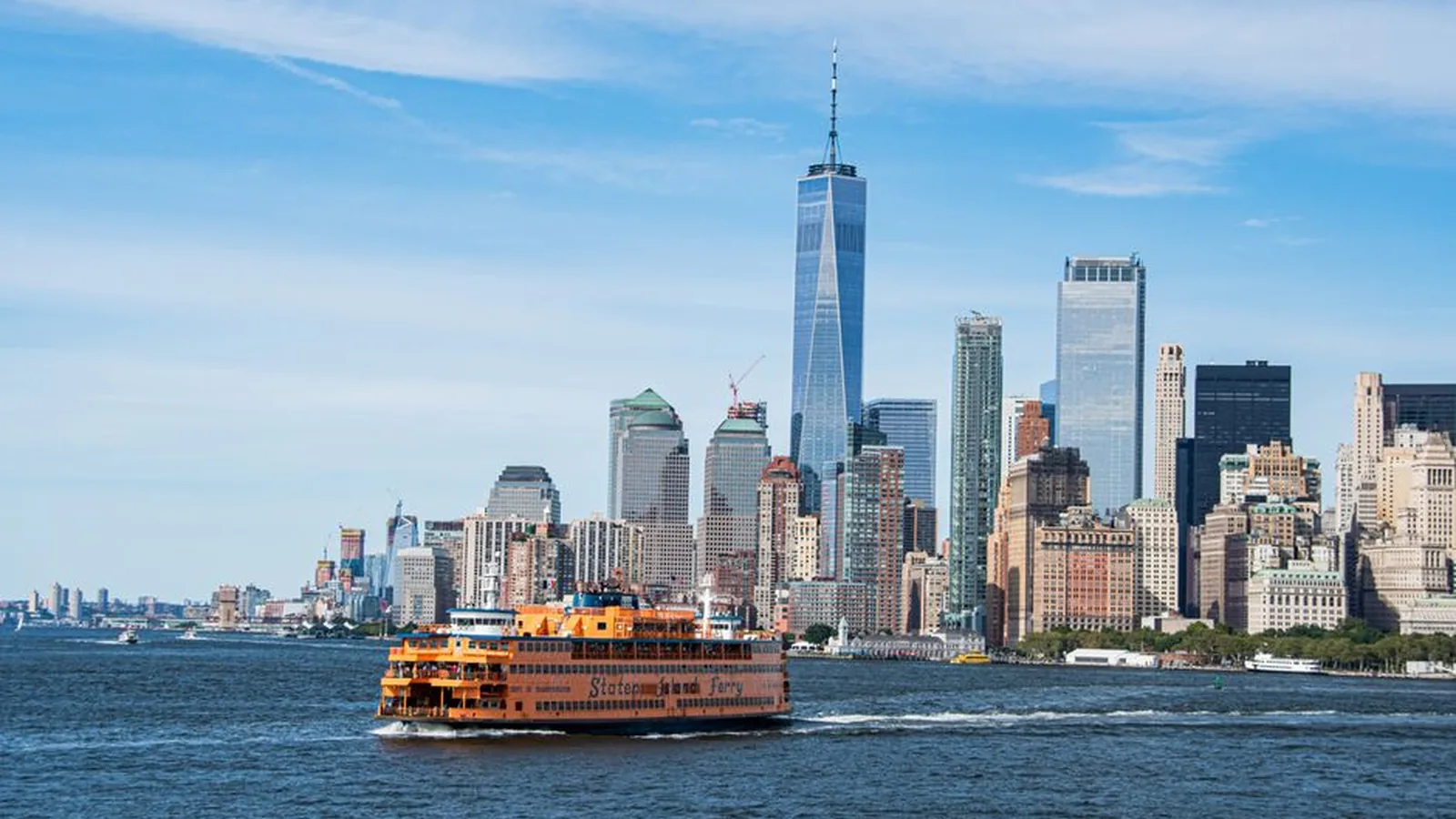
If you are deciding between NYC Ferry and the subway in 2026, the key tradeoff is simple: the subway is usually cheaper and more extensive, while the ferry is often calmer, more scenic, and sometimes more direct for waterfront trips. The best choice depends less on the borough and more on whether your start and end points are close to a ferry landing.
This guide combines the cost question and the route-comparison question into one practical answer: what NYC Ferry costs now, where it goes, how transfers work, and the kinds of trips where it genuinely beats the subway.
NYC Ferry fare in 2026
As of August 27, 2026, the standard NYC Ferry one-way fare is $4.50. NYC Ferry also sells a 10-Trip Pass for $29.00 and an Unlimited 2-Day ticket for $15.00 in the app. Eligible riders in the Ferry Discount Program can buy a one-way ticket for $1.45, and the same $1.45 fare is available to eligible middle and high school students through the Student Discount Program. NYC Ferry’s ticketing page lists these current prices and programs.
One important detail: transfers within the NYC Ferry system are free for 120 minutes once you start your one-way trip, but that does not make ferry-to-subway transfers free. NYC Ferry transfers must be to a different ferry route, and a one-way ticket cannot be reused for a round trip on the same route. NYC Ferry explains those rules in its ticketing information and FAQ.
You also cannot buy a ticket onboard. You need to buy in advance in the NYC Ferry app, on the website, or at a ticket vending machine at the landing, according to the official FAQ.
Subway fare in 2026
For comparison, the MTA subway and local bus fare is $3.00 for most riders in 2026, and express buses cost $7.25. The MTA’s official fares page lists those current prices.
If you pay with OMNY, the subway has a major cost advantage for frequent riders: the 7-day fare cap means that when you use the same card, phone, wearable, or OMNY card for 12 paid trips in a 7-day period, additional eligible rides are free for the rest of that week. OMNY says the standard cap is $35, and it applies to subways and eligible bus trips. See the official OMNY fare cap page and fare cap FAQ.
That means the price comparison is not just $4.50 versus $3.00. For regular New Yorkers, the subway can become effectively even cheaper because of fare capping, while NYC Ferry does not offer a weekly or monthly unlimited pass, as its FAQ notes.
Bottom-line cost comparison
Here is the simplest way to think about price:
- One occasional ride: subway usually wins on cost at $3.00 versus $4.50 for ferry. MTA, NYC Ferry
- Several sightseeing-style trips over a weekend: the ferry can become competitive because of the $15 Unlimited 2-Day option. NYC Ferry
- Daily commuting: the subway usually wins on cost because of OMNY’s $35 weekly fare cap. OMNY
- Eligible discounted riders: NYC Ferry’s $1.45 discounted fare can make the ferry much more competitive if you qualify. NYC Ferry
Where NYC Ferry goes in 2026
NYC Ferry’s active system map includes the East River, South Brooklyn, Astoria, Rockaway-Soundview, St. George, and Governors Island Shuttle services, with route pages and schedules published by NYC Ferry on its routes and schedules page.
The most useful way to understand the network is by corridor:
East River corridor
The East River route links East 34th Street, Long Island City/Hunters Point, Greenpoint, Williamsburg, DUMBO/Fulton Ferry, and Wall Street/Pier 11, with some service patterns split into East River (A) and East River (B) during peak periods. That structure is described on the official East River route page.
This is the part of the system where the ferry most often makes practical sense for locals and visitors alike, because many of these neighborhoods are on the water and can require indirect subway trips.
Astoria corridor
The Astoria route connects Wall Street/Pier 11, Brooklyn Navy Yard, East 34th Street, Long Island City, Roosevelt Island, Astoria, and East 90th Street. NYC Ferry outlines those stops on its Astoria route page.
This route is especially useful for trips between western Queens, the Upper East Side waterfront, and Lower Manhattan.
South Brooklyn corridor
The South Brooklyn route serves East 34th Street, Corlears Hook, Wall Street/Pier 11, Atlantic Avenue/Brooklyn Bridge Park Pier 6, Red Hook, Sunset Park/Brooklyn Army Terminal, Bay Ridge, and Governors Island. Those landings are listed on the official South Brooklyn route page.
This is one of the strongest ferry routes for neighborhoods that are either far from the subway or awkward to reach by train.
Rockaway-Soundview corridor
The combined Rockaway-Soundview service covers waterfront points stretching between the Rockaways, Brooklyn, Lower Manhattan, Midtown East/Upper East Side, and the Bronx, with service details on NYC Ferry’s Rockaway-Soundview page.
This route can be excellent for very specific trips, but it is less of a general-purpose substitute for the subway because frequencies and travel patterns are more specialized.
Staten Island waterfront corridor
The St. George route connects St. George, Bay Ridge, Atlantic Avenue/Pier 6, Wall Street/Pier 11, Battery Park City, and Midtown West/Pier 79. NYC Ferry also says riders using the Midtown West/W. 39th Street landing have access to free shuttle buses throughout Midtown. See the official St. George route page.
That free shuttle is a meaningful perk because one of the ferry’s biggest weaknesses is often the “last mile” after you get off the boat.
When the ferry beats the subway
The ferry does not beat the subway on most random point-to-point trips. It wins when geography favors the shoreline.
1. When both ends of your trip are near the water
The ferry is strongest when you can walk to the landing on both sides. Good examples include:
- Wall Street/Pier 11 to DUMBO or Williamsburg
- East 34th Street to Long Island City or Roosevelt Island waterfront
- Red Hook to Lower Manhattan
- Bay Ridge or Sunset Park to Wall Street/Pier 11
- St. George to Battery Park City or Midtown West
On these kinds of trips, the ferry can avoid awkward subway transfers, long station walks, or unreliable crosstown bus connections. The official route pages confirm these direct landing-to-landing connections across the system. Routes & schedules
2. When the subway route is indirect
The subway is optimized for moving huge numbers of riders, not always for moving them directly between waterfront neighborhoods. For instance, trips like Red Hook to Manhattan, Astoria waterfront to Wall Street, or Brooklyn Navy Yard to East 34th Street can be simpler by boat because the ferry is literally tracing the shoreline that the subway often bypasses.
This is less about raw speed and more about door-to-door friction. A ferry that takes slightly longer in motion can still feel better if it replaces a train transfer plus a 15-minute walk.
3. When comfort matters more than lowest cost
NYC Ferry can offer real quality-of-life advantages: outdoor decks, skyline views, more personal space than a crowded rush-hour train, onboard concessions, and a less stressful boarding environment for some riders. NYC Ferry states that concessions are available onboard, and its rider information notes stroller space and bike capacity on vessels. FAQ, Experience page
That will not matter to every rider, but it matters a lot to some commuters, families, and visitors.
4. When you are carrying a bike or stroller
NYC Ferry allows bicycles, including e-bikes with pedals and stand-up e-scooters, subject to capacity limits, and says ferries can accommodate about 8 to 10 bicycles. There is also designated stroller space onboard. Those policies are laid out in the FAQ and boarding information.
That can make the ferry more convenient than the subway for some off-peak leisure or family trips, especially between parks and waterfront neighborhoods.
When the subway still wins
For most New Yorkers, the subway remains the default choice.
1. When you need the cheapest ride
At $3.00 for most riders, plus OMNY fare capping, the subway is generally the budget option. The ferry’s standard $4.50 fare is simply higher unless you qualify for a discount or specifically benefit from the 10-trip or 2-day ferry options. MTA fares, OMNY fares, NYC Ferry ticketing
2. When your trip starts inland
If you live or work far from a landing, the ferry often loses before the boat even leaves. A 12-minute subway ride can beat a ferry trip that requires a 15-minute walk to the pier.
This is the main reason ferry-versus-subway comparisons can be misleading: the right comparison is door to door, not station to station or landing to landing.
3. When you need very frequent service
Subway service usually offers more stations and more frequent departures than ferry service. NYC Ferry publishes route-specific schedules rather than subway-style high-frequency service assumptions, and some routes or branches vary by weekday, weekend, or season. Riders should check the official routes and schedules page before assuming the next boat is close.
4. When you need a free transfer to the bus or subway
This is a major difference. OMNY provides the usual MTA transfer benefits within the transit system, while NYC Ferry fares are separate from subway and bus fares. OMNY’s FAQ notes that riders get the same free transfers as with MetroCard within eligible MTA trips, but that does not make the ferry part of the same fare system. See OMNY fare cap FAQ and NYC Ferry ticketing.
Best typical use cases for NYC Ferry
If you want a practical shortlist, NYC Ferry makes the most sense in 2026 for these situations:
Best for commuters
- Red Hook, Bay Ridge, Sunset Park, Astoria waterfront, Long Island City waterfront, and St. George residents whose jobs are near Wall Street/Pier 11, Midtown East, Battery Park City, or Midtown West
- Riders whose commute would otherwise require multiple subway transfers
- Riders who value predictability and comfort enough to pay more than subway fare
Best for visitors
- Travelers making a same-day loop through DUMBO, Williamsburg, Long Island City, Wall Street, Governors Island, or Brooklyn Bridge Park
- People who want transportation that doubles as a harbor and skyline experience
- Weekend users who can benefit from the Unlimited 2-Day ticket
Best for families and leisure trips
- Trips involving strollers, waterfront parks, or bikes
- Summer rides to neighborhoods where the journey itself is part of the outing
Practical tips before you choose ferry over subway
Check schedules, not just maps
A route on the map does not guarantee a convenient departure time. Use NYC Ferry’s official routes and schedules page or app for live timing and service status.
Account for walking time
Before paying extra for the ferry, compare:
- Walk to the landing
- Wait time for the next boat
- Ferry travel time
- Walk from the destination landing
Then compare that total with the subway route.
Know the transfer rules
- Ferry-to-ferry transfers are free for 120 minutes within the NYC Ferry system. NYC Ferry
- Ferry-to-subway transfers are not free.
- Subway and bus riders using OMNY can benefit from MTA transfer rules and the weekly fare cap. OMNY
Buy before boarding
NYC Ferry says tickets must be bought before boarding, either in the app, online, or at the landing kiosk. FAQ
Is NYC Ferry worth it in 2026?
Usually, not as a blanket replacement for the subway. But for the right trip, absolutely.
If your trip is waterfront to waterfront, the ferry can be the most pleasant and sometimes the simplest option in the city. If your trip is inland, transfer-heavy after landing, or price-sensitive, the subway usually remains better.
The smartest rule is this: take the ferry when it is direct, scenic, and close on both ends; take the subway when you need reach, frequency, and the lowest fare.
Bottom line
In 2026, NYC Ferry’s standard fare is $4.50, compared with $3.00 for most subway and local bus rides. That means the subway still wins on price for most riders, especially with OMNY’s $35 weekly fare cap. But NYC Ferry can beat the subway for select waterfront trips such as Wall Street to Brooklyn waterfront neighborhoods, Astoria or Long Island City waterfront trips, Staten Island waterfront trips, and leisure rides where comfort matters. The ferry is best treated as a targeted tool, not a universal substitute for the subway.
Sources
- NYC Ferry: Ticketing Info
- NYC Ferry: FAQ
- NYC Ferry: Routes & Schedules
- NYC Ferry: East River route
- NYC Ferry: Astoria route
- NYC Ferry: South Brooklyn route
- NYC Ferry: Rockaway-Soundview route
- NYC Ferry: St. George route
- NYC Ferry: Experience / rider information
- NYC Ferry: Boarding process / bike information
- MTA: Fares and tolls
- OMNY: Weekly Fare Cap
- OMNY: Fare Cap FAQ
- OMNY: General Information
- OMNY: Detailed information on OMNY