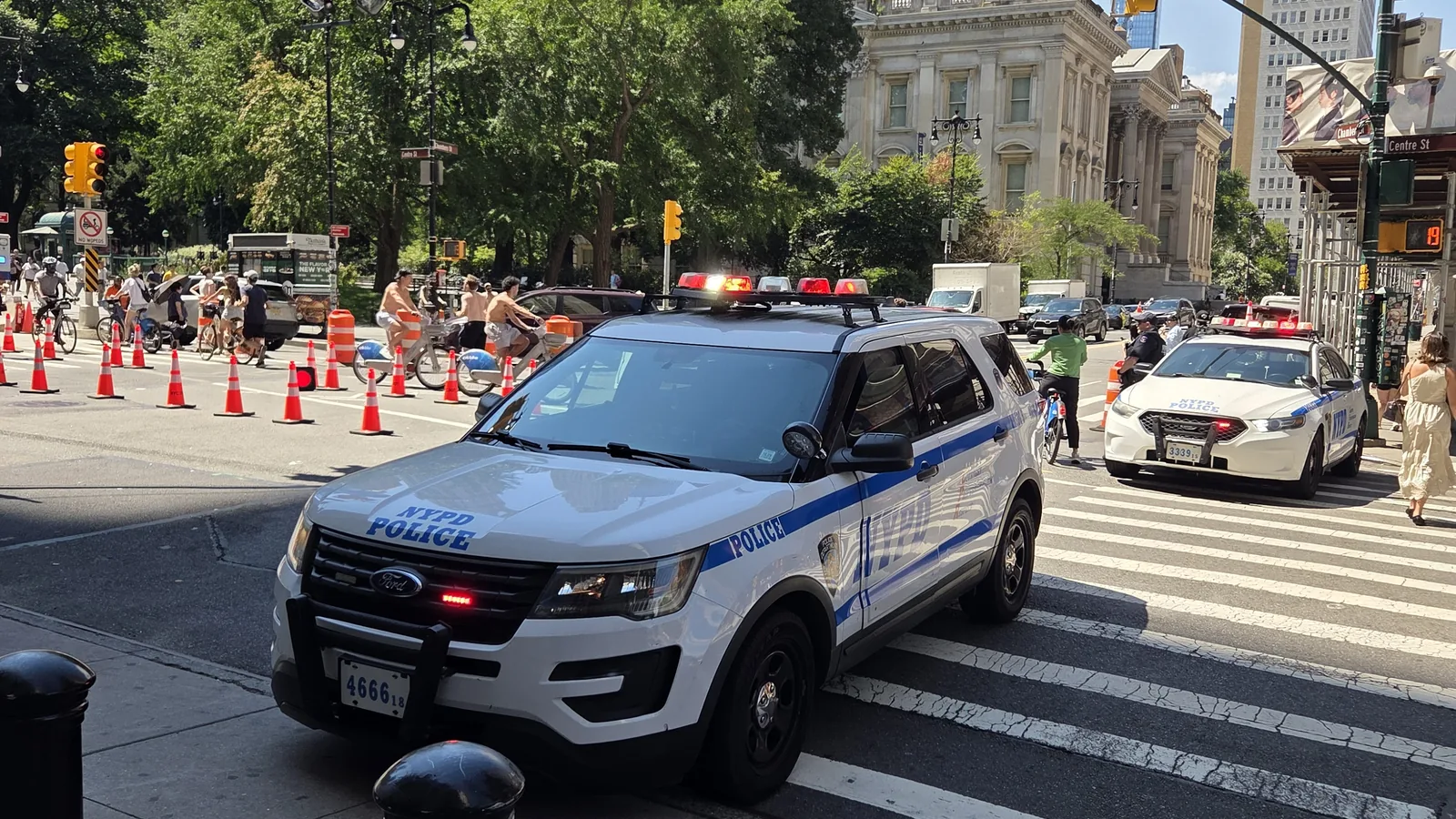
On-street parking is no longer just a matter of feeding a meter and checking a time-limit sign. In many U.S. cities, curb space is now managed as part of the transportation system itself, with policies designed to reduce cruising for parking, improve turnover, support deliveries and transit, and make limited street space work harder.
For drivers, this means parking rules can vary by block, by time of day, by permit status, and sometimes by real-world demand. For planners and policy watchers, it means on-street parking has become a core curb-management tool rather than a static local ordinance.
Why on-street parking policy matters
The Federal Highway Administration (FHWA) describes active parking management as the dynamic management of parking to optimize utilization and influence travel behavior. FHWA notes that dynamically managed parking can reduce time spent searching for spaces and improve localized traffic flow by giving travelers better information and managing demand more efficiently (FHWA Active Parking Management).
FHWA’s parking pricing primer also explains why cities have moved away from flat, fixed-rate parking policies. When parking is underpriced or free, demand often exceeds supply, which can increase congestion, reduce access to businesses, and encourage unnecessary circling. The agency cites research suggesting that about 30% of cars in congested downtown traffic may be searching for parking in some settings (FHWA primer, Contemporary Approaches to Parking Pricing).
That link between parking supply and traffic flow is why many local governments now treat curb regulations as part of broader transportation systems management and operations. FHWA identifies parking pricing, shared parking, traveler information, and curb access management as strategies that can help manage demand within busy corridors and districts (FHWA subarea TSMO reference).
The basic rulebook: what governs curbside parking
In the United States, most day-to-day parking rules are set and enforced by state and local governments, not by the federal government. However, traffic control devices used to communicate those rules on public roads are governed by the Manual on Uniform Traffic Control Devices (MUTCD), the national standard adopted under federal regulation (FHWA MUTCD FAQ).
That matters because drivers are expected to follow the legal restrictions communicated through signs, curb markings, meters, and pavement markings. The current 11th Edition of the MUTCD includes standardized parking and stopping signs, supplemental plaques showing where restrictions begin or end, and curb-marking guidance for areas where curb colors or curbside markings are used to convey parking regulations (MUTCD 11th Edition).
A few practical implications follow:
Read the entire sign face and nearby plaques
Parking restrictions are often not contained in one simple phrase. Time-of-day rules, loading exceptions, permit-only hours, street-cleaning windows, and directional limits such as “THIS SIDE OF SIGN” or “HERE TO CORNER” can all affect whether a space is legal to use (MUTCD Figure 2B-25 guidance).
Curb colors and markings may matter too
The MUTCD allows curb markings and word markings to reinforce parking restrictions, especially where ordinary signs may be obscured or where special no-parking conditions apply near hydrants, crosswalks, driveways, transit stops, or intersections (MUTCD Part 3).
Local codes still control the underlying rule
The sign or meter tells you how the city is applying the rule on that block, but the legal authority usually comes from a local ordinance or municipal code. So while the sign format is standardized, the actual restrictions can differ significantly from one city to another.
Dynamic pricing: why meter rates now change
One of the biggest policy shifts in recent years is the move from fixed parking meter rates to performance-based or demand-responsive pricing.
Instead of charging the same amount all day, every day, cities increasingly adjust prices by block and time period to maintain some vacancy. The policy goal is straightforward: keep parking well used, but not so full that drivers must circle.
FHWA explains that dynamic parking pricing relies on occupancy data and historic demand data to calculate rates that maintain a target level of available parking while reducing congestion tied to parking search behavior (FHWA data needs for ATDM).
Two leading city examples show how this works in practice:
Seattle’s performance-based pricing model
Seattle’s Department of Transportation says it sets on-street rates and hours based on data to achieve a goal of 1 to 2 spaces available per block, with a target occupancy of 70% to 85%. The city states that this helps drivers find parking more reliably, reduces emissions and congestion from circling, and supports business access through turnover (Seattle Performance-Based Parking Pricing Program).
Seattle’s 2024 paid parking report says the city adjusts rates three times per year and uses occupancy and transaction data to find the lowest hourly rate that still leaves about one or two open spaces per blockface (Seattle 2024 Paid Parking Report).
San Francisco’s demand-responsive pricing model
San Francisco Municipal Transportation Agency (SFMTA) currently uses demand-responsive pricing to adjust rates by $0.25 increments. According to SFMTA, the agency raises rates on blocks with estimated average occupancy above 80%, lowers rates where occupancy is below 60%, and leaves rates unchanged where occupancy falls within the 60% to 80% target range. SFMTA says this is intended to open up parking spaces and reduce circling and double-parking. The latest citywide meter changes took effect on July 13, 2026, with the next scheduled change listed for October 5, 2026 (SFMTA Citywide Meter Rate Adjustments).
What dynamic pricing changes for drivers
For drivers, demand-based pricing means:
- the same block may cost more at busy times and less at slower times;
- rates can vary between weekdays and weekends;
- the legal parking duration may still be limited even if you pay more;
- app-based payment, plate-based payment, and updated meter systems are increasingly common.
In other words, paying the meter is no longer enough; you also need to confirm the active time window, posted duration limit, permit requirements, and any special curb use rules.
Residential permit systems and priority parking
Another major policy tool is the residential parking permit or priority parking program. These programs do not usually create more curb space; instead, they reserve access or longer stays for residents in neighborhoods affected by spillover parking from business districts, transit stations, campuses, or event venues.
FHWA’s examples of parking benefit districts and permit systems show a common structure: residents can buy permits for neighborhood street parking, while non-resident parking is managed through time limits, paid spaces, event rules, or designated business areas (FHWA Parking Benefit Districts).
San Francisco’s on-street parking policy also states that the city uses tools such as parking meters and residential parking permits (RPP) to help make parking more readily available as part of the transportation system (SFMTA On-Street Parking Policy).
In practice, permit systems commonly do some combination of the following:
Protect resident access
Neighborhood blocks near commercial centers or transit corridors often shift to permit-priority parking so commuters or visitors cannot occupy curb space all day.
Manage visitor and employee demand
Many programs allow visitor permits, caregiver permits, contractor permits, or limited employee permits. The exact categories vary widely by city and district.
Support local reinvestment
Some parking benefit district models direct permit or meter revenues toward neighborhood improvements, mobility projects, or streetscape upgrades, although this depends entirely on local law and program design (FHWA California Parking Benefits Districts).
Enforcement is becoming more data-driven
Enforcement remains central to whether curbside policy actually works. A well-designed pricing or permit system fails if drivers can ignore time limits, permit restrictions, loading zones, or payment requirements with little risk.
FHWA notes that newer parking technologies have improved enforcement while also lowering associated costs, partly through better data collection and better payment systems (FHWA primer, Contemporary Approaches to Parking Pricing). The agency also highlights examples such as license plate reader technology being used in Washington, D.C., to support performance-pricing analysis and enforcement functions in modern parking programs (same FHWA primer).
For drivers, current enforcement trends often include:
- plate-based enforcement rather than paper receipts on dashboards;
- digital verification of payment sessions and permit status;
- closer monitoring of loading zones, bus stops, and curb lanes repurposed for safety or transit operations;
- more frequent updates to rules during construction, events, or seasonal street operations.
Temporary restrictions also matter. FHWA’s work-zone policy resources underscore that temporary traffic control rules can apply on federal-aid projects and that jurisdictions must provide compliant temporary control devices during construction and maintenance activity (FHWA Work Zone Regulation and Policy). For drivers, that means a legal parking space on Monday may become a temporary no-parking zone later in the week because of utility work, resurfacing, or special-event traffic control.
The curb is no longer just for parking
A key policy change behind many “parking” updates is that cities increasingly manage the curb for multiple competing uses, not just storage of private vehicles.
NACTO’s curb-management work argues that cities are moving toward corridor-level curb policies that prioritize transit reliability and street safety first, then accommodate deliveries, passenger pick-ups, accessibility needs, and managed parking (NACTO Curb Appeal). FHWA similarly notes that smart-city and TSMO systems can help agencies manage curbside supply by time of day, event status, and street operations such as cleaning or work activity (FHWA smart connected communities chapter).
That broader curb-management approach explains why drivers increasingly encounter:
- peak-hour tow-away lanes,
- delivery-only zones,
- bus bulbs and transit lanes,
- passenger pick-up/drop-off areas,
- accessible loading spaces,
- micromobility parking corrals,
- changing weekend or event restrictions.
The policy logic is not simply anti-parking. It is that the curb is scarce public right-of-way, and cities are trying to allocate it to uses with the highest transportation, safety, and access value at a given place and time.
How these policies affect urban traffic flow
The traffic impact of on-street parking policy is often misunderstood. The key question is not merely whether parking exists, but how predictably it is managed.
Well-managed curb parking can improve traffic operations by reducing cruising, limiting double-parking, improving turnover, and making deliveries and pick-ups more orderly. FHWA specifically states that active parking management can positively affect localized traffic flow by reducing the time travelers spend searching for parking and by giving real-time parking-related information (FHWA Active Parking Management).
Poorly managed curb space, by contrast, can worsen traffic through:
- oversubscribed low-cost parking that encourages circling;
- unclear rules that produce hesitation and illegal stopping;
- underenforced loading rules that push freight activity into travel lanes;
- rigid static allocations that do not match actual daily demand.
An important planning takeaway is that pricing, permits, and enforcement are most effective when paired with clear policy goals. FHWA and ITE both emphasize that curb-management tools should match community objectives, and that deciding what the curb is for is often more important than the choice of technology alone (FHWA primer; ITE overview of the Curbside Management Practitioners’ Guide).
Practical tips for drivers navigating current rules
1. Check every layer of regulation
Look for the meter, the main sign, arrows or supplemental plaques, curb color, pavement markings, and any temporary postings.
2. Assume rules may vary by time period
A legal space at 11 a.m. may become a loading zone, tow-away lane, or permit-only area later the same day.
3. Verify whether payment is plate-based
In many cities, enforcement is tied to the license plate, not a paper ticket on the dashboard. Entering the wrong plate can still result in a citation.
4. Do not treat permit zones as informal
Residential permit systems are increasingly digitized and enforceable. If posted signs restrict non-permit parking beyond a short window, officers may verify permit status electronically.
5. Recheck familiar blocks
Dynamic pricing and updated curb regulations mean your usual parking spot may still exist but under different rates, hours, or permitted uses than last season.
Bottom line
On-street parking policy is shifting from static, one-size-fits-all regulation to active curb management. The big current themes are demand-responsive pricing, resident-priority permit systems, digital enforcement, and reallocation of curb space to transit, freight, accessibility, and safety needs.
For drivers, the practical consequence is simple: always read the block as it exists today, not as you remember it. For planners and urban policy followers, the bigger story is that parking regulation is now a traffic-management and public-space policy tool, not just a revenue device.
Sources
- Federal Highway Administration: Active Parking Management
- Federal Highway Administration: Contemporary Approaches to Parking Pricing
- Federal Highway Administration: Data Needs for ATDM
- Federal Highway Administration: Planning for TSMO within Subareas
- Federal Highway Administration: TSMO in Smart Connected Communities, Chapter 2
- FHWA MUTCD FAQ
- MUTCD 11th Edition
- MUTCD Part 3
- Seattle DOT Performance-Based Parking Pricing Program
- Seattle DOT 2024 Paid Parking Report
- SFMTA Citywide Meter Rate Adjustments
- SFMTA On-Street Parking Policy
- NACTO: Curb Appeal
- FHWA Parking Benefit Districts, State of Practices in the United States
- FHWA California Parking Benefits Districts
- FHWA Work Zone Regulation and Policy
- ITE overview of the Curbside Management Practitioners’ Guide