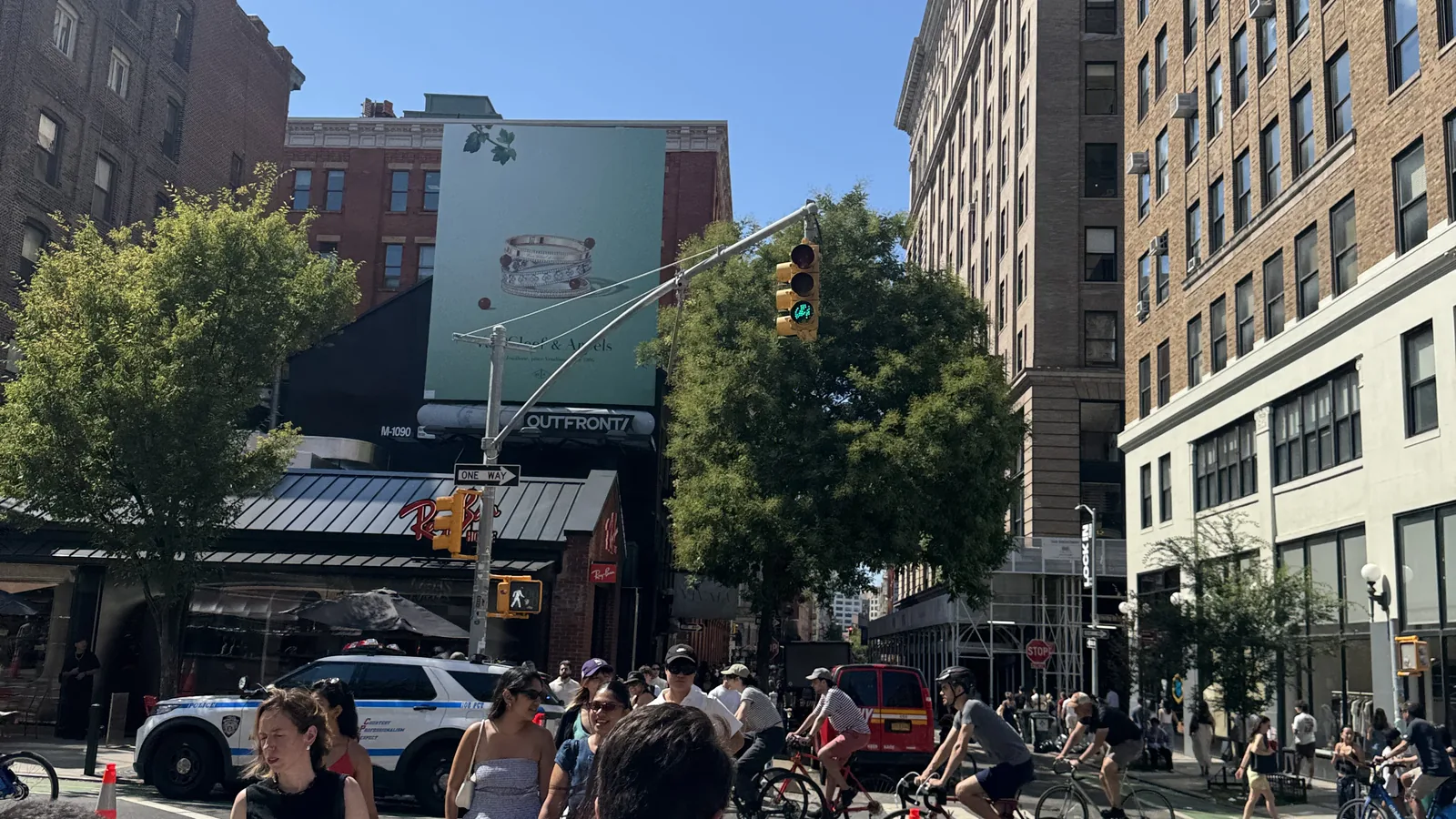
If you are visiting New York City for the first time, crossing the street can feel more stressful than it does at home. Intersections are busy, traffic can turn while you are crossing, bike lanes add another stream of movement, and local habits are not always the same as the safest or most legal choice.
The good news is that NYC street-crossing basics are straightforward once you know what to watch for. The safest approach is simple: cross at the crosswalk, obey the pedestrian signal, assume turning traffic may still move, and check for cars and bikes in every direction before stepping off the curb.
Understand NYC pedestrian signals
In New York City, pedestrian signals generally use three phases: a steady Walk symbol, a flashing Don’t Walk hand with a countdown timer, and a solid Don’t Walk hand. Under NYC traffic rules, a steady walking person means pedestrians may proceed across the roadway in the direction of the signal, and other traffic must yield to them. A flashing upraised hand means there may be insufficient time to cross and pedestrians should not start crossing; people already in the crosswalk should continue to the nearest sidewalk or safety island. A steady upraised hand means pedestrians must not start crossing in that direction. These meanings are set out in NYC rules and align with New York State guidance. NYC DOT rule notice; NYSDOT pedestrian signal guidance; NY DMV manual
What Walk means
When the signal shows a steady walking person, that is your legal signal to begin crossing. Even then, do not step out blindly. Look for drivers who may be turning, cyclists using the bike lane, and any vehicle that has not fully stopped before you leave the curb. New York State safety guidance specifically tells pedestrians to obey signals and remain alert while crossing. Governor’s Traffic Safety Committee
What the flashing Don’t Walk hand means
This is the phase tourists misunderstand most often. The flashing hand and countdown mean the crossing time is already being used up. In practical terms, do not start crossing once the flashing hand has begun, even if the timer still shows several seconds. If you were already in the crosswalk when the signal changed, continue forward to the nearest sidewalk or refuge island; do not turn around and do not panic-run unless needed to avoid immediate danger. Official New York guidance says the flashing phase is not safe for starting a crossing. NYC DOT rule notice; NYSDOT pedestrian signal guidance; NYSDOT kids safety page
What the solid Don’t Walk hand means
A steady red hand means do not enter the crosswalk. If you are still standing on the curb, wait for the next Walk signal. NYC DOT rule notice
What the countdown timer actually tells you
The countdown shows the number of seconds remaining in the flashing-hand phase, not a personalized estimate of whether you can still make it. It is there to help people who are already crossing judge how much time remains before the signal changes to a steady Don’t Walk. Official New York guidance says that if you approach after the flashing-hand-and-timer phase has started, you should not begin crossing. NYSDOT pedestrian countdown guidance
That leads to the practical rule visitors should remember:
- Steady Walk: you may start crossing.
- Flashing hand with numbers: do not start crossing.
- Solid hand: do not start crossing.
A common tourist mistake is seeing “12” or “9” seconds left and assuming that is enough time to start. Legally and safely, that is not the intended use of the countdown.
Why you still need to watch for turning traffic
Even when you have the right of way, traffic may still turn across your crosswalk. In NYC, drivers often get a green light at the same time pedestrians get a Walk signal, unless the intersection has a separate turning phase or a leading pedestrian interval that gives walkers a head start. Drivers are required to yield, but you should never assume they have seen you. The New York DMV notes that more than 35% of NYC pedestrian injury crashes occur when a driver is attempting a left turn, and NYC DOT has separately found left turns produce disproportionately severe pedestrian and cyclist injuries. NY DMV manual; NYC DOT left-turn study release
For a first-time visitor, the safest habit is this: when the Walk appears, pause for a beat and scan for vehicles turning into your path before stepping out. Pay special attention to:
- Left-turning drivers, who may be watching for oncoming cars instead of people in the crosswalk.
- Right-turning drivers, especially if they are focused on a traffic gap.
- Large vehicles such as buses or trucks, which have bigger blind spots and wider turns.
One-way vs. two-way streets: why you should still check both directions
Much of Manhattan uses one-way streets, which can lull visitors into looking only in the direction traffic is supposed to come from. That is unsafe.
You should still look both ways before crossing any NYC street. Here is why:
- Turning vehicles can enter from a direction you were not expecting.
- Bike lanes may run differently from the vehicle lane next to them.
- A two-way bike lane can exist on a one-way street.
- Emergency vehicles, deliveries, and unusual street layouts can create movement from more than one direction.
NYC safety materials teach pedestrians to look in all directions and not rely only on signs and signals, including on one-way streets. NYC DOT safety newsletter; NYC DOT traffic signs page
A good visitor rule is: treat every curb like traffic could appear from either side until you have personally checked.
Do not forget the bike lane
Visitors often scan for cars and miss the bike lane entirely. In many parts of Manhattan, especially avenues and major crosstown streets, you may cross:
- a parking lane or curb area,
- a bike lane or protected bike lane,
- then one or more lanes of motor traffic.
That means your crossing may involve separate conflicts at different points.
NYC recognizes many legal devices in bike lanes, including bicycles and e-bikes, and the city has been updating bike-lane designs to better handle that mix. NYC DOT’s bike safety guidance tells cyclists to go with the pedestrian Walk signal unless a bike signal or sign says otherwise, and to yield to pedestrians. Even so, as a pedestrian you should actively look for approaching riders before stepping across a bike lane. NYC DOT Bike Smart; NYC DOT intersection design release; NYC DOT Third Avenue bike signal release
Special caution with protected bike lanes
Protected bike lanes can feel safer because cars are farther away, but they can also hide fast-moving cyclists or e-bikes behind parked cars, barriers, or turning vehicles. Before crossing, look specifically into the bike lane zone, not just the car lanes. If there is a dedicated bike signal, obey the pedestrian signal and still verify the lane is clear before you continue. NYC DOT Bike Smart
What locals commonly do vs. what is recommended
In busy parts of New York, you will see locals do things that are common but not ideal for first-time visitors. For example, some people step off the curb the moment traffic slows, start crossing during the countdown, weave diagonally through a crowd, or cross midblock when they are in a hurry.
That is common behavior, but it is not the same as the best legal and safety advice.
For visitors, the recommended approach is:
- Cross at the crosswalk.
- Start only on the steady Walk signal.
- Keep moving at a steady pace; do not stop in the middle to check your phone or take photos.
- Stay alert for turning vehicles and bikes, even when you have the right of way.
- If the flashing hand has started, wait for the next cycle.
Think of local behavior as something you may observe, not something you should copy.
Practical examples at busy Manhattan intersections
Example 1: Crossing a wide avenue in Midtown
Imagine you are crossing Eighth Avenue at West 42nd Street. The Walk symbol appears. Before stepping out, check the nearest turning lane for drivers swinging right or left, then glance into any bike lane before entering it. Cross in a straight line, keep pace with the signal, and do not stop midway to take a photo of Times Square. If the signal changes to the flashing hand while you are already halfway across, continue to the far sidewalk.
Example 2: Crossing a one-way crosstown street
Suppose you are crossing West 46th Street, a one-way street. Traffic may mostly come from one side, but you should still check both directions. Why? A turning vehicle from the avenue can enter unexpectedly, and a bike lane or cyclist may approach from a direction you did not anticipate. Do not assume “one-way” means “only look once.”
Example 3: Crossing an avenue with a protected bike lane on the East Side
At a place such as Third Avenue, you may encounter a broad crossing with a protected bike lane next to the curb and multiple travel lanes beyond it. First, verify the pedestrian signal. Second, check the bike lane itself for cyclists or e-bikes. Third, check turning drivers in the vehicle lanes. Treat each layer of the street as its own hazard zone rather than assuming the entire path is clear at once. NYC DOT Third Avenue bike signal release
What tourists often get wrong
Starting on the countdown
The countdown is not a suggestion that you can sprint across if you think you are fast enough. If the flashing hand has started, wait.
Watching only for cars
In NYC, a bike lane may be the first moving lane you cross. Look for bicycles and e-bikes before you step off the curb.
Trusting the right of way too much
Having the right of way helps legally, but it does not physically stop a turning driver or rider who failed to see you.
Looking only one way on one-way streets
One-way traffic patterns do not eliminate turns, bikes, or unusual street movement.
Stopping in the crosswalk
At busy Manhattan intersections, hesitation creates confusion. Start only when it is your phase, then cross predictably and keep moving.
Quick checklist to remember before crossing
Use this short mental checklist every time:
- Signal: Is it a steady Walk, not a flashing or solid hand?
- Scan: Look left, right, and into the bike lane.
- Turns: Check for cars turning across the crosswalk.
- Go straight: Cross in the marked crosswalk without stopping.
- Keep moving: If the flashing hand begins after you start, continue to the far side.
Bottom line
The safest way to cross a New York City street is to begin only on the steady Walk signal, ignore the temptation to start during the countdown, and actively watch for turning cars, bikes, and e-bikes even when you have the right of way. In Manhattan especially, assume every intersection has more than one stream of traffic to check. A few extra seconds of caution make a big difference.
Sources
- New York City Department of Transportation: Notice of Adoption on pedestrian countdown signals
- New York State Department of Transportation: Pedestrian countdown signal guidance
- New York State DMV Driver Manual, Chapter 11: Sharing the Road
- Governor’s Traffic Safety Committee: Tips for Pedestrian Safety
- NYC DOT: Bike Smart
- NYC DOT: Enhanced Crossings
- NYC DOT: Traffic Signs
- NYC DOT press release: Left-turn study
- NYC DOT press release: New bike-lane traffic signals on Third Avenue
- NYC DOT press release: New intersection design for pedestrians and cyclists
- NYC DOT safety newsletter reminding pedestrians to look both ways, even on one-way streets